Working without stopping the site
On a logistics site you do not close the yard. Lorries keep coming in and going out, staff park, deliveries arrive. The works have to fit into that activity without interrupting it.
In practice that means marking off a small work zone, moving it as the job progresses, leaving the traffic routes clear every evening and carting the rubble away as we go rather than stockpiling it on site.
It is the same trade as at a private house, but with one more organisational constraint, and that is often what sets apart a firm used to working on commercial sites.
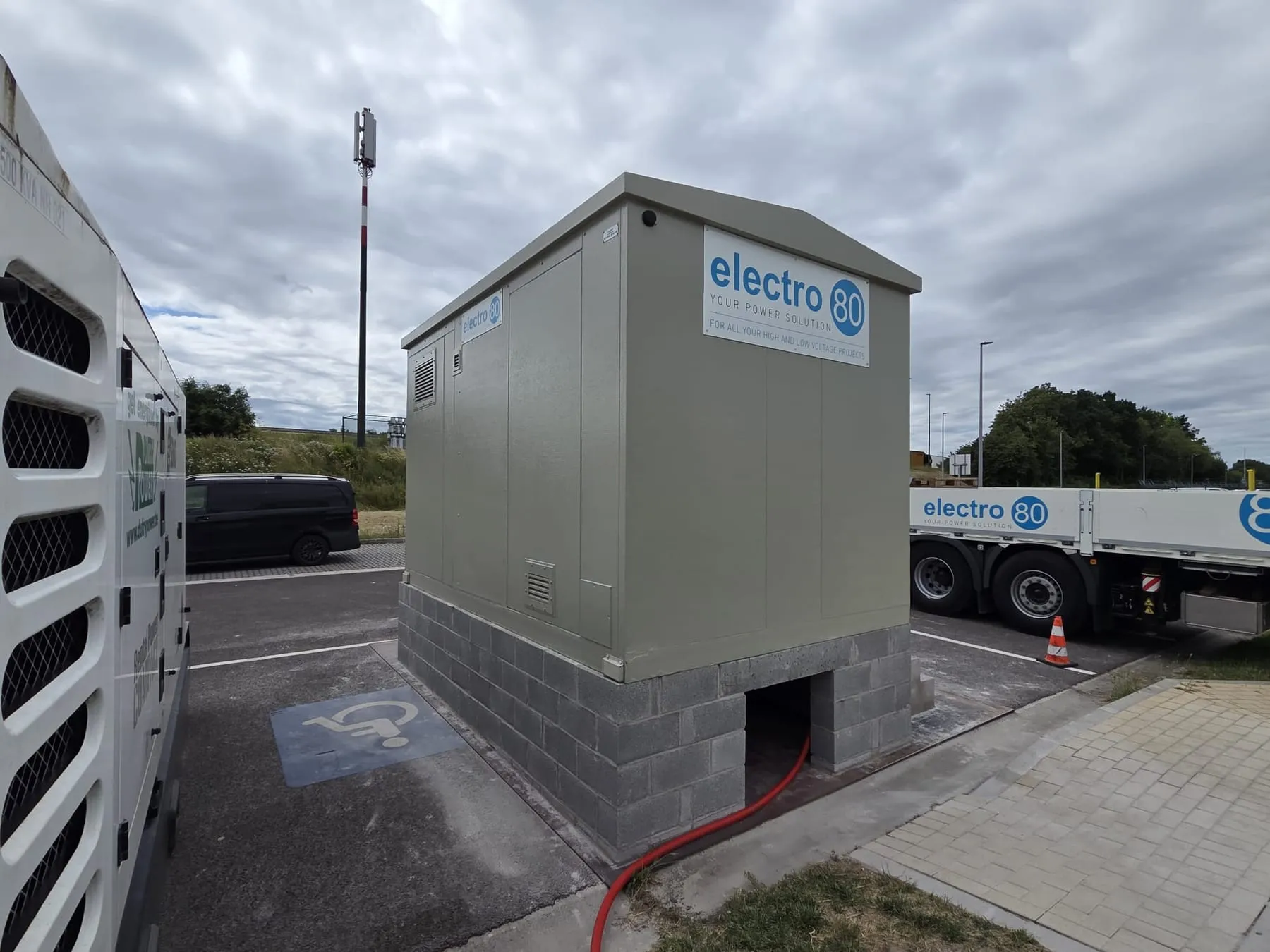
A technical plinth for a standby generator
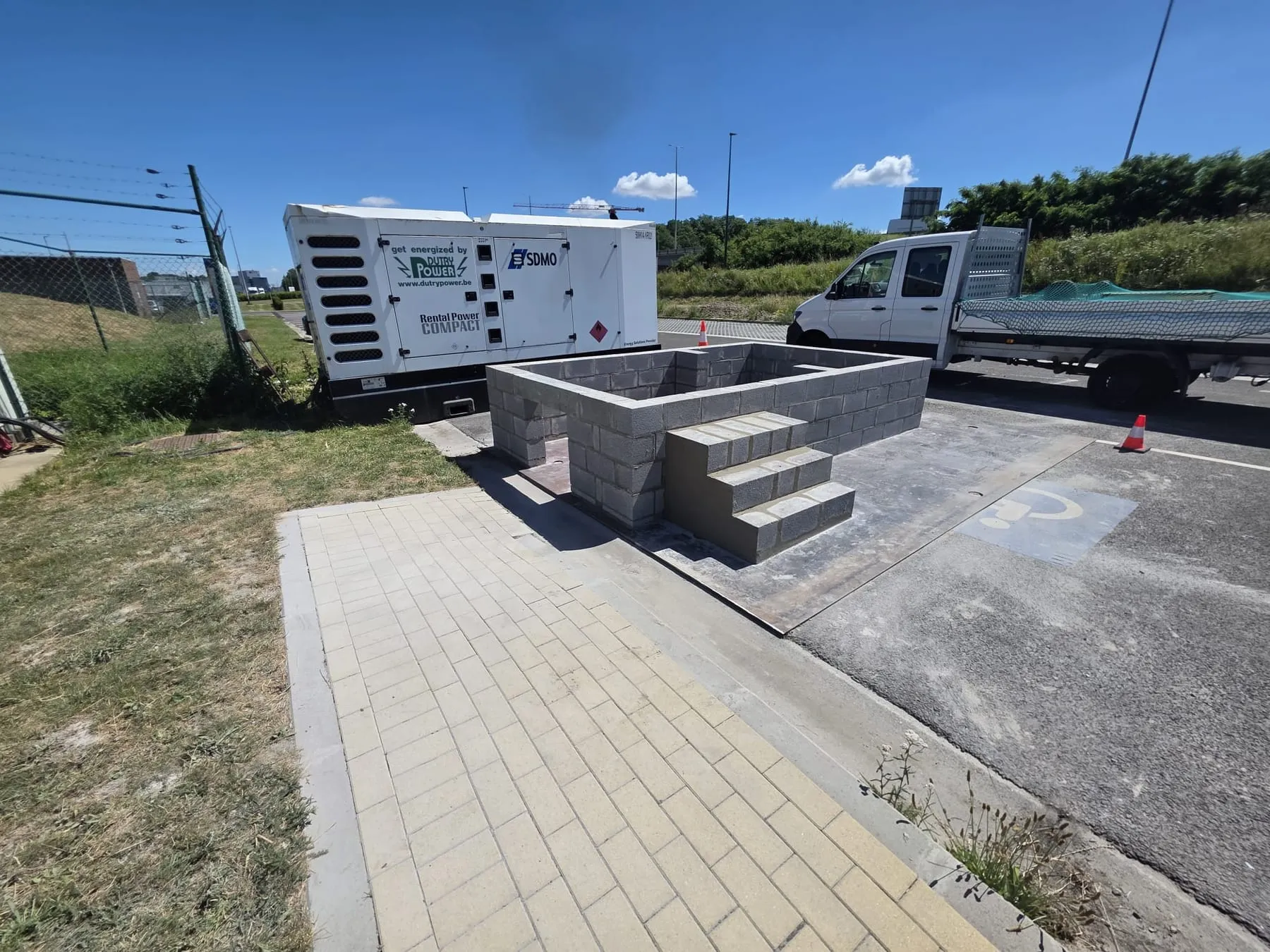
The heart of this job was building a base to carry a standby generator. Equipment of this kind is heavy, it vibrates, and it has to stay perfectly stable and clear of water for years.
We built a bearing base in concrete blocks on a foundation sized for the load, with a flat, level surface. The surroundings are graded so the water runs away outwards and never towards the equipment.
The whole thing stays accessible: maintenance has to be able to work without dismantling anything.
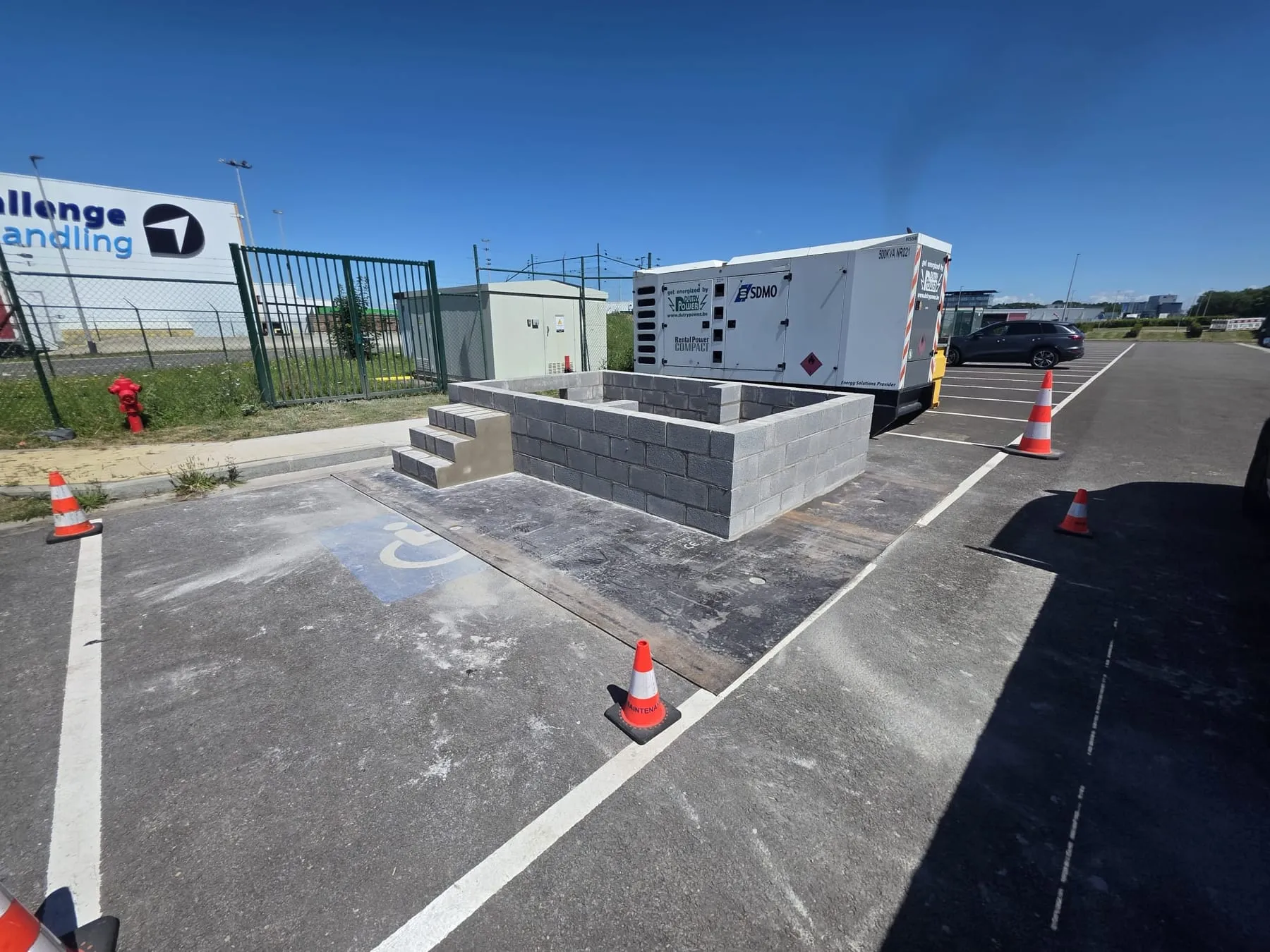
Access steps in concrete blocks
The base is reached by steps built in concrete blocks. The risers are all the same height, which sounds obvious but remains the first cause of falls on improvised access to plant.
The choice of concrete block is not an aesthetic one, it is functional: tough, repairable and consistent with the rest of the site. On an industrial site, something that ages well is worth more than something pretty that falls apart in two winters.
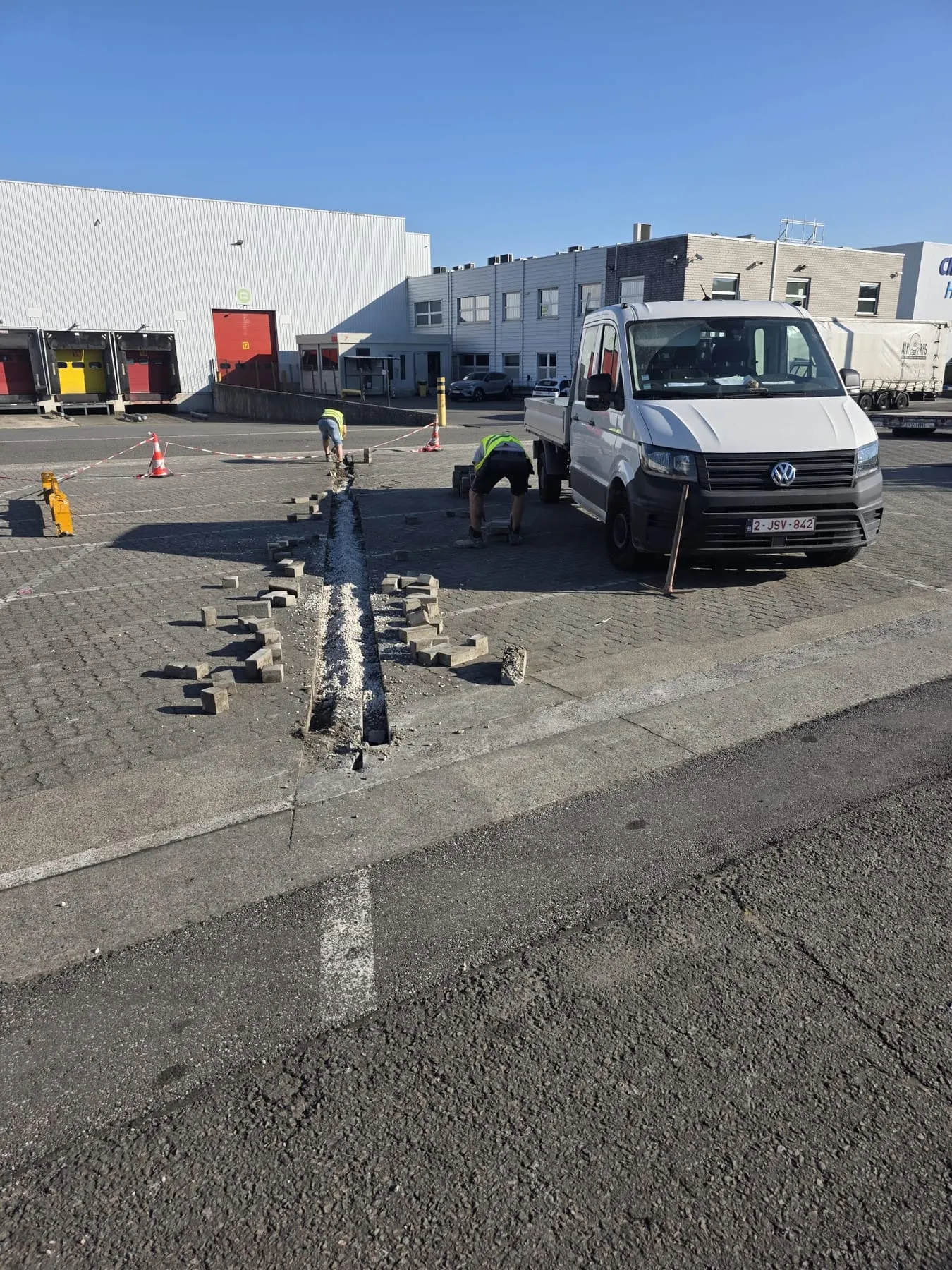
Cutting and reinstating the block paving
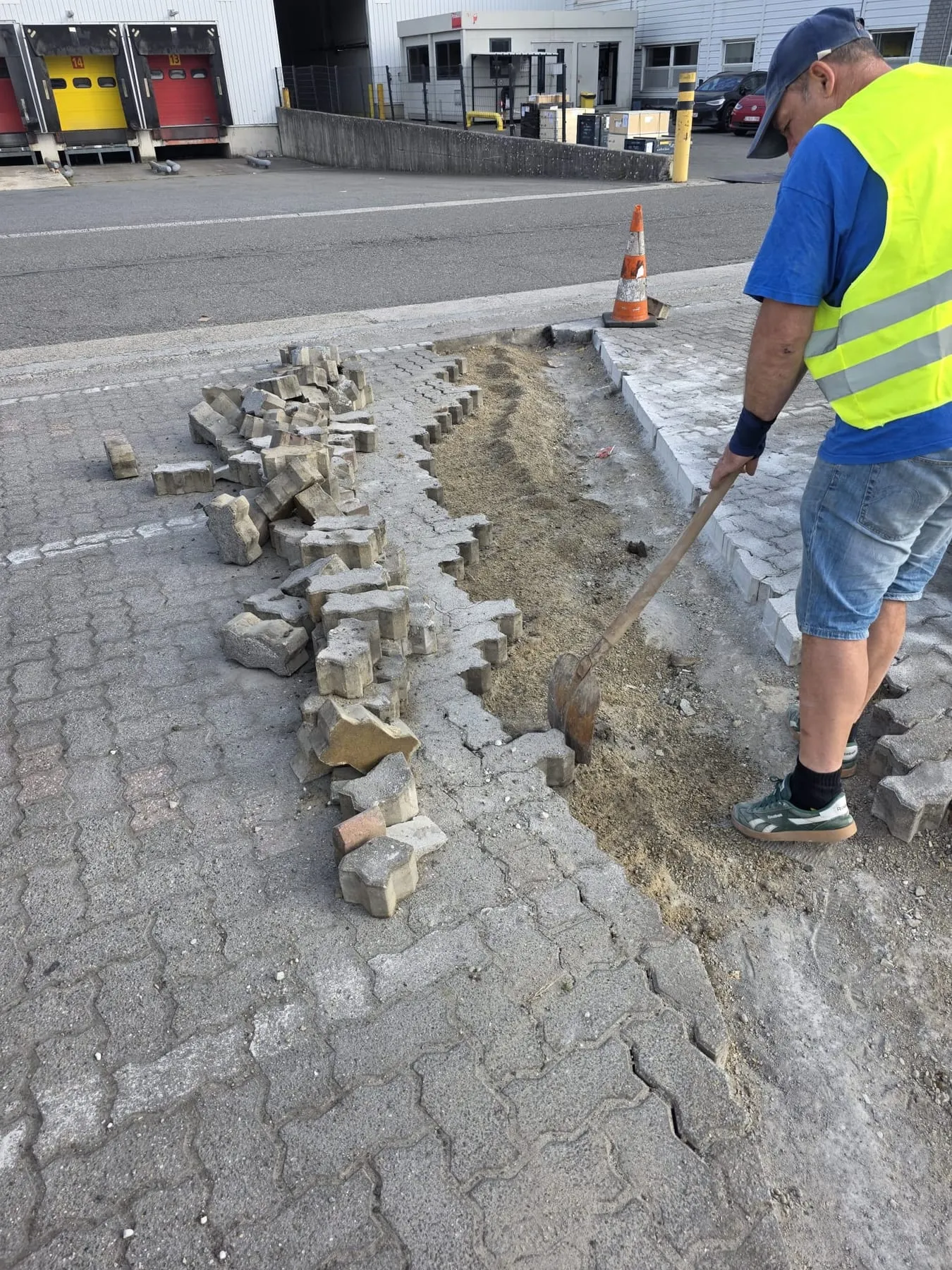
Running services under a paved yard means opening the surface up. The quality of the final result depends almost entirely on that first cut: a clean cut allows an invisible repair, a rough cut leaves a permanent scar.
Once the services are in, the trench is backfilled and compacted in layers. It is the compaction that prevents the visible dip six months later, when the lorries have driven over it a few hundred times.
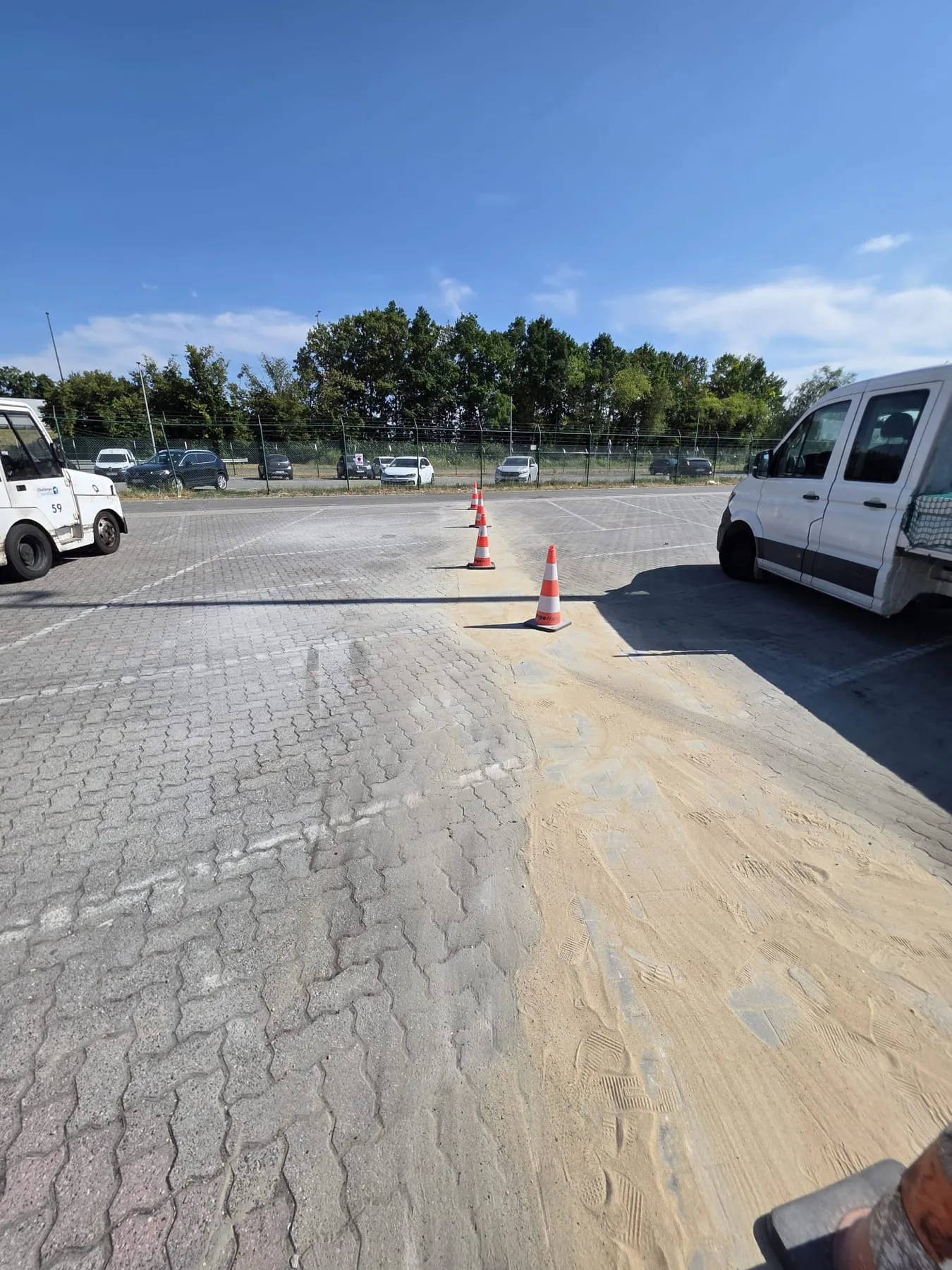
The bedding layer, the stage you never see again
Under every block there is a layer of stabilised sand screeded to the exact thickness. It is what gives the final flatness and what spreads the loads.
In an area used by heavy goods vehicles, the thickness and the make-up of the sub-base are not the same as in front of a house. Block paving sized for a garden path sinks within a few months under commercial traffic.
What we build for businesses
Car parks and private roadways, technical plinths, concrete platforms, the surroundings of industrial buildings, steps and access, paving repairs, clearance and reinstatement.
For this type of job we draw up a detailed quote after visiting the site, taking account of the access constraints and the operating hours.
Frequently asked questions
Do you work for businesses and not only for private clients?
Yes. We carry out external works, technical plinths and roadway repairs for commercial sites in the Liège area, on a live site if need be.
Can you work outside operating hours?
Depending on the nature of the work, yes. Some noisy or obstructive operations are planned early in the morning or towards the end of the week. That is discussed during the site visit.
How long does a technical plinth of this kind take?
Allow one to two weeks as a rule, depending on the dimensions, the foundation required and any reinstatement of the surroundings.